
Start with one clear subject.
The strongest wallpaper ideas usually begin with one thing you can picture: a cabin, a quiet shoreline, a sculptural shape, a city street. Name that subject before adding atmosphere or technique.
“A little cabin on the moon” gives the model a center of gravity. “Beautiful, amazing, intricate, highly detailed” describes enthusiasm, but says little about what belongs in the image.
A small recipe that travels well.
Subject + setting + lighting + color + composition.
Try: “A tiny observatory on a mossy hill, just after sunset. Soft blue mist, warm amber windows, and plenty of open sky above.” The subject is clear, the light has a source, and the composition leaves room for a phone clock.
Not every prompt needs all five ingredients. Use enough to express the feeling, then let the model handle some of the visual details.
Think about the screen, too.
A wallpaper shares space with icons, a clock, notifications, or application windows. For a mobile lock screen, try leaving quieter space in the upper third. For a desktop, avoid placing the only interesting detail exactly where your icons usually sit.
Choose the right aspect ratio in the studio. A portrait composition is different from a landscape image cropped down later. The crop preview helps, but cannot restore a subject that was framed outside the original image.
One style is often enough.
Choose a clear visual direction: cinematic photography, a soft watercolor scene, minimalist architecture, or a glass-like 3D abstraction. Too many competing styles can make a prompt harder to interpret.
Describe qualities rather than depending on a named artist. “Muted colors, soft paper texture, loose brushwork” tells the model more about the desired surface and mood.
Change one meaningful thing.
If the composition is working, use a revision to explore a different time of day, softer light, or a narrower palette. Be specific about what should remain: “Keep the cabin and horizon, but make the sky a gentle lavender.”
A genuine image revision uses the original image as input and requires an editing-capable provider. Remixing a prompt generates a new interpretation and may change the composition more substantially.
Three little places to begin.
- Quiet nature: A dark cedar forest with a turquoise stream, morning mist, a small red gate in the distance, and a clear upper canopy.
- Abstract color: Fluid coral glass folded like silk, warm pearl highlights, deep charcoal background, one elegant central curve.
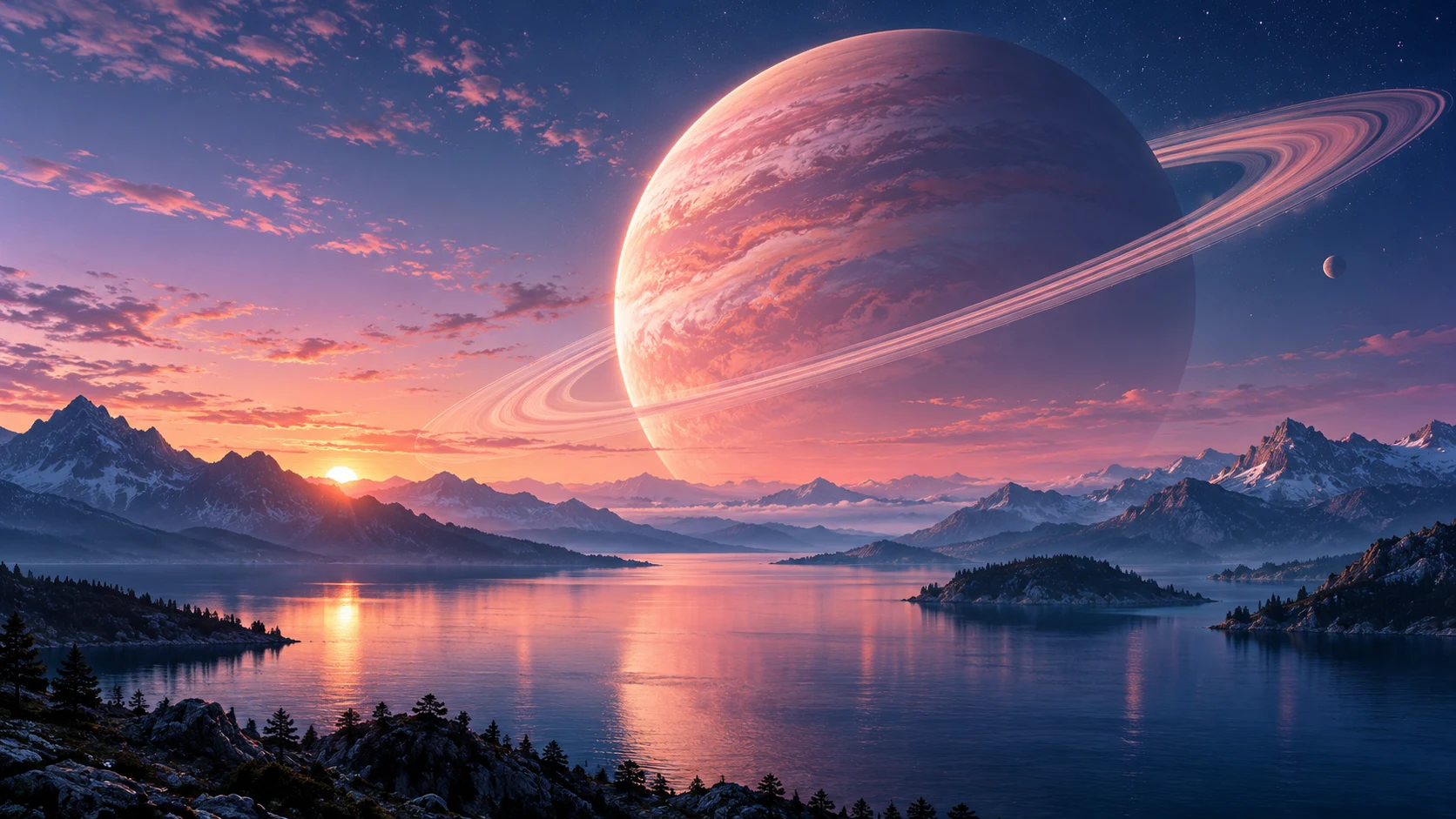
- Space: A luminous ringed planet above a cobalt mountain lake, rose twilight, tiny mountain silhouettes, still reflections.
Open the studio and take one of these ideas somewhere of your own.
A little inspiration, ready when you are.
Browse the gallery, open the studio, or find an answer in Help.